Homepage

WHAT WE DO

Sino-German Environmental Partnership

The Sino-German Environmental Partnership supports the bilateral environmental policy dialogue through the exchange and advice on various topics since 2013.

Since 2013, the Sino-German Environmental Partnership has supported bilateral environmental policy dialogue through the exchange of experience and advice on various specialist topics. Thereby, the project enhances institutional and individual capacities through training, the exchange of personnel, and knowledge transfer, to best prepare China for its future as a transformed “Ecological Civilization” and its path towards a “Beautiful China”.

The partnership is overseen by the Ministry for the Environment, Climate Action, Nature Conservation and Nuclear Safety (BMUKN) of the Federal Republic of Germany and the Ministry of Ecology and Environment (MEE) of the People’s Republic of China. The Deutsche Gesellschaft für Internationale Zusammenarbeit (GIZ) GmbH is responsible for implementing the Sino-German Environmental Partnership, which is funded through the International Climate Initiative (IKI) of BMUKN.

ACTIVITIES

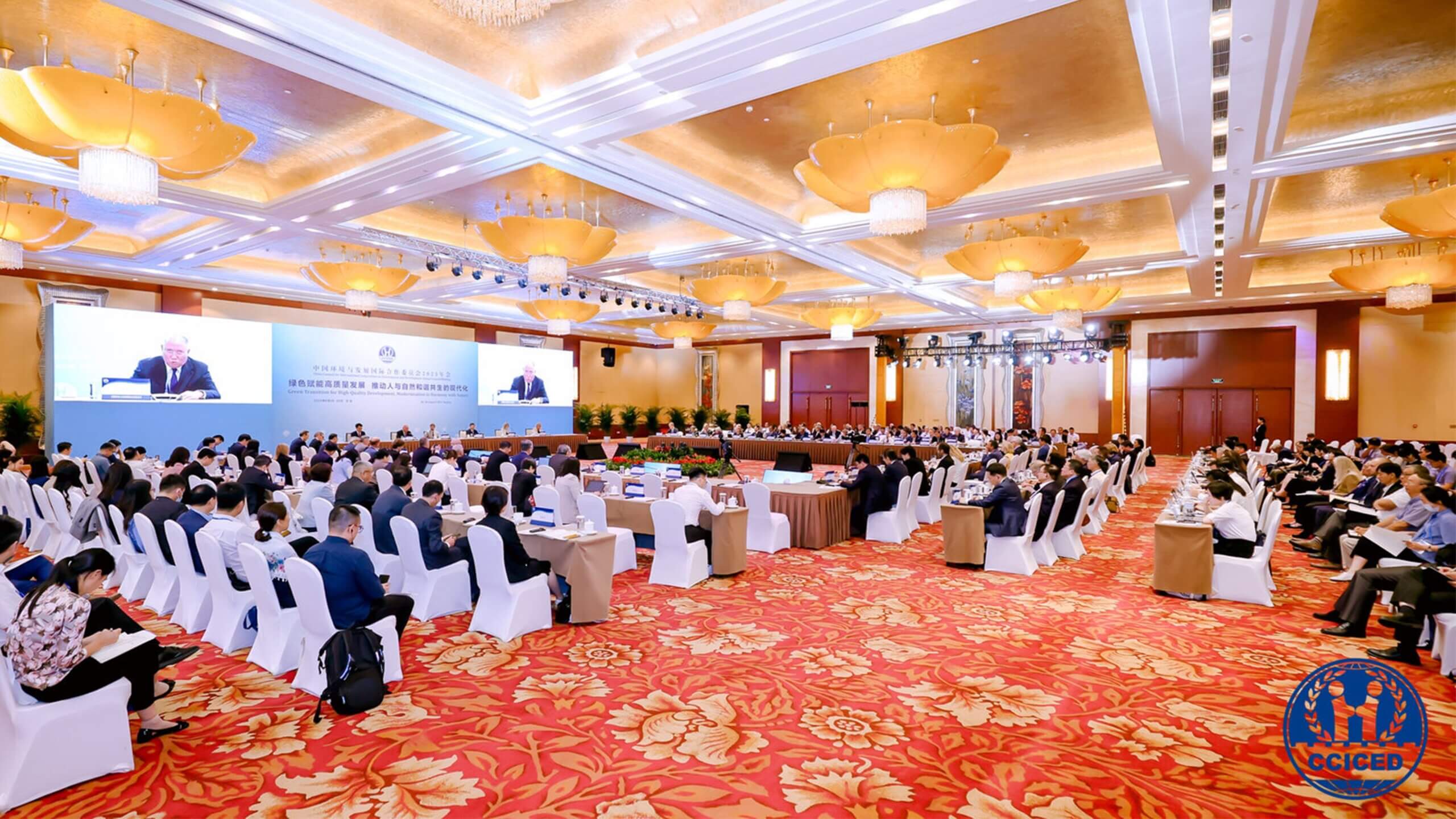
On 29 January 2026, a new China Council for International Cooperation on Environment and Development (CCICED) special policy study (SPS) was kicked off, focusing on advancing high-quality development through circular economy with smart digitalisation. The 2026 SPS is co-led by CCICED Special Advisor Ilka Hirt, Deputy Director-General of the International Policy of the BMUKN, and CCICED Special Advisor Hu Qing, Professor of the Southern University of Science and Technology.

The project organized a study tour for a delegation from the MEE, the China Council for International Cooperation on Environment and Development (CCICED), and the Office of the Central Commission for Finance and Economy to Germany and Belgium from 30 October to 6 November 2025. The tour focused on carbon reduction, pollution reduction, biodiversity conservation, and green growth. It aimed to strengthen capacity for collaborative research and to exchange best practices. The programme combined academic insights, practical case studies, and policy discussions through meetings with leading research institutions, government bodies, and innovation centres. The delegation highly valued the exchange, noting that it provided a strong foundation for further technical cooperation.

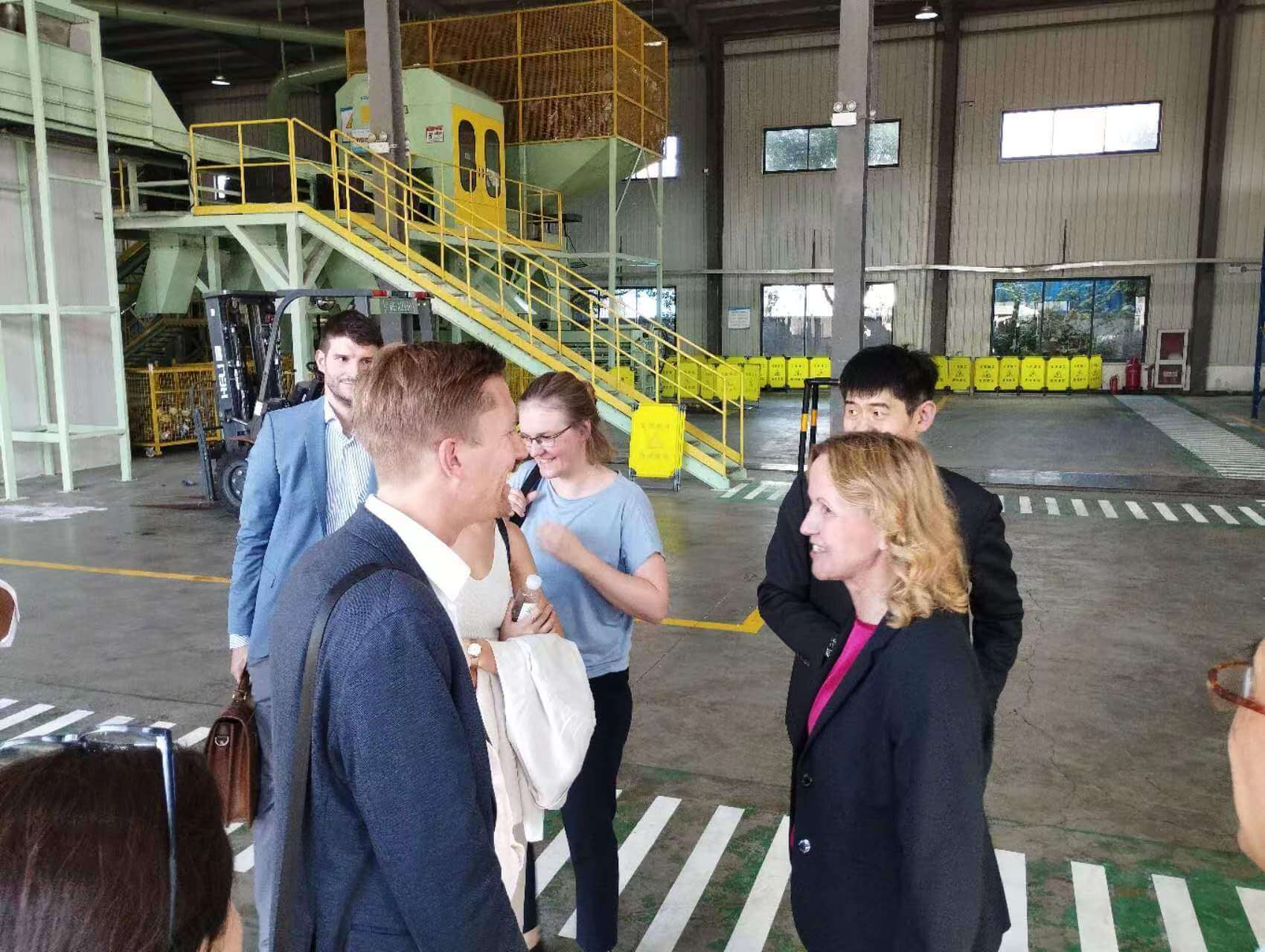
On 11–12 September 2025, a delegation from the Foreign Environmental Cooperation Office (FECO) of China’s Ministry of Ecology and Environment (MEE) visited Düsseldorf, Essen, and GIZ Bonn to exchange knowledge on per- and polyfluoroalkyl substances (PFAS) phase-out, monitoring and remediation. Organised under the Sino-German Environmental Partnership Phase III (SGEP III), the programme combined site visits and expert discussions on EU regulatory developments, drinking-water standards, contaminated-site management and waste treatment. Participants from German authorities, academia and industry shared practical solutions and policy insights. The delegation expressed high satisfaction with the exchange, which lays the foundation for continued technical cooperation.

News

On 17 June 2025, the General Office of the CPC Central Committee and the General Office of the State Council issued the Opinions on Comprehensively Promoting the Protection and Governance of Rivers and Lakes. This is China’s first top-level policy providing a unified framework for river and lake governance. It sets out six key areas and introduces three core subsystems for modern flood-disaster prevention. By 2035, the policy aims to strengthen flood control, safeguard drinking-water sources and restore aquatic ecosystems, while promoting water-related culture and improving governance mechanisms. It builds on the Yangtze (2021) and Yellow River (2022) Protection Laws.

https://www.gov.cn/zhengce/202506/content_7029509.htm

China is taking a historic step toward strengthening environmental governance with its first-ever Ecological Environment Code (Draft), submitted for a first reading in April 2025. Comprising 1,188 articles, the draft code consolidates over 30 existing environmental laws and introduces groundbreaking provisions ranging from the protection of ecological rights to the regulation of emerging pollutants and climate-related measures. For the first time, green and low-carbon development is given a dedicated legal framework. Open for public comment, the draft marks a major move toward a more unified, systematic, and future-oriented approach to environmental protection. Once adopted, it will become China’s second statutory code.

http://www.npc.gov.cn/npc/c2/c30834/202505/t20250513_445257.html

The Ministry of Ecology and Environment issued the Opinions on Strengthening the Environmental Impact Assessment of Construction Projects Involving New Pollutants in Key Industries on April 10, which requires strengthening the environmental impact assessment of construction projects involving new pollutants in six key industries. Industries include petrochemicals, coatings, textile printing and dyeing, rubber, pesticides, and pharmaceuticals.

https://www.gov.cn/zhengce/zhengceku/202504/content_7018852.htm